
Paid Advertising Trends in 2026
Paid advertising in 2026 is shaped by updated Google policies that prioritise privacy, transparency, and user-first experiences. Advertisers must follow stricter data usage guidelines, avoid intrusive tracking, and focus on delivering relevant, helpful content. Campaigns that align with these standards—clear messaging, ethical targeting, and real value—are more likely to perform well and build long-term trust.
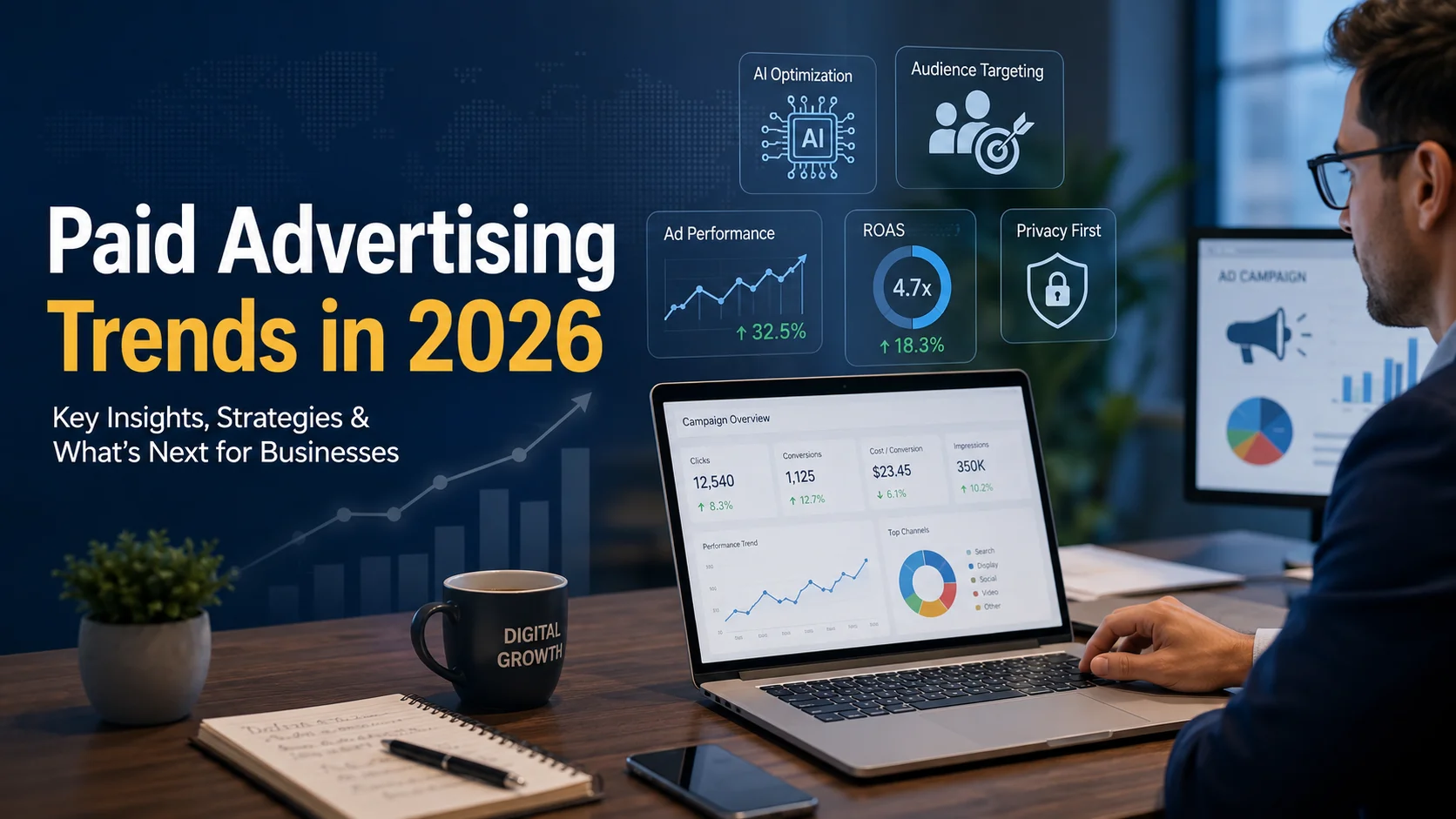
Paid Advertising Trends in 2026
Paid advertising in 2026 is shaped by updated Google policies that prioritise privacy, transparency, and user-first experiences. Advertisers must follow stricter data usage guidelines, avoid intrusive tracking, and focus on delivering relevant, helpful content. Campaigns that align with these standards—clear messaging, ethical targeting, and real value—are more likely to perform well and build long-term trust.
The Evolution of Paid Advertising in 2026
Paid advertising has moved beyond traditional targeting into a smarter, more privacy-focused ecosystem. With the decline of third-party cookies, businesses now depend heavily on first-party data collected through websites, email lists, and customer interactions. This shift encourages brands to build stronger relationships with their audiences instead of relying on external data sources.
Artificial intelligence is now central to campaign management. Platforms like Google Ads use machine learning to automate bidding, optimise creatives, and improve targeting accuracy. These systems analyse user intent in real time, allowing advertisers to deliver more relevant ads without violating privacy expectations.
Another key development is the rise of omnichannel advertising. Businesses are combining search, display, video, and social campaigns to create a consistent user journey. This approach improves engagement and increases the chances of conversion.
For businesses working on digital growth, integrating paid ads with high-quality website pages is essential. Linking campaigns to well-structured pages such as your Home, Services, and Contact pages helps guide users naturally and improves conversion outcomes. A strong connection between ads and landing pages is now a core success factor.
Google’s Focus on Trust and Helpful Content
“Google emphasises that content and ads should demonstrate experience, expertise, authority, and trustworthiness while providing genuine value to users.”
In 2026, this principle directly impacts ad performance. Campaigns that mislead or overpromise are less effective, while those that clearly communicate value and match user intent perform better.
Key Paid Advertising Trends in 2026
AI-Powered Campaign Optimisation
AI tools are transforming how ads are created and managed. From automated bidding to responsive ad formats, AI helps improve efficiency and performance.
Benefits include:
- Faster decision-making
- Better audience targeting
- Continuous performance improvement
First-Party Data Strategy
With privacy regulations increasing, first-party data is now critical. Businesses should focus on collecting data through:
- Website forms
- Email subscriptions
- Customer accounts
This data allows more accurate and compliant targeting.
Growth of Video Advertising
Short-form video continues to dominate digital platforms. Ads on YouTube Shorts, Instagram Reels, and TikTok generate higher engagement.
Effective video ads are:
- Short and clear
- Visually engaging
- Focused on one message
Contextual Targeting Returns
Instead of tracking user behaviour, advertisers are placing ads based on content relevance. This improves user experience and aligns with privacy standards.
Voice and Visual Search Ads
Search behaviour is changing. Users now rely on voice assistants and image-based searches. Optimising ads for conversational queries and visual discovery is becoming essential.
Performance Max and Automation
Google’s Performance Max campaigns allow advertisers to manage multiple channels from a single campaign. These campaigns use automation to maximise reach and conversions.
Practical Strategies for Better Results
To succeed with paid advertising in 2026, businesses should focus on practical, user-first strategies:
- Create fast, mobile-friendly landing pages
- Use simple and clear ad copy
- Test multiple ad variations
- Monitor campaigns regularly
- Align ads with user intent
It is also important to guide users effectively once they click your ad. For example, directing traffic to your Services page for solutions or your Contact page for enquiries can improve conversion rates. Internal linking between pages strengthens the overall user journey.
The Role of Content in Paid Advertising
Content quality plays a major role in campaign success. Ads must not only attract attention but also deliver value.
Strong ad content should:
- Address a real problem
- Offer a clear benefit
- Match the landing page message
When content aligns with user expectations, it improves engagement and builds trust.
Common Mistakes to Avoid
Avoiding common errors can significantly improve performance:
- Over-targeting a very small audience
- Ignoring mobile optimisation
- Using unclear or misleading headlines
- Sending users to poorly designed landing pages
- Relying only on automation without strategy
A balanced approach that combines automation with human insight delivers the best results.
Final Thoughts
Paid advertising in 2026 is more focused on trust, relevance, and user experience than ever before. Businesses that adapt to privacy changes, use AI effectively, and deliver meaningful content will achieve better results. By combining smart strategies with strong website integration, brands can build sustainable growth and long-term success in digital advertising.