
Google Ads for Beginners: A Practical 2026 Guide
Google Ads remains one of the most effective paid advertising platforms in 2026, but it also requires careful alignment with Google’s latest policies and best practices. Advertisers must focus on transparency, user privacy, and high-quality experiences. This guide simplifies Google Ads for beginners, helping you build compliant, effective campaigns that deliver measurable results without relying on outdated or misleading tactics.
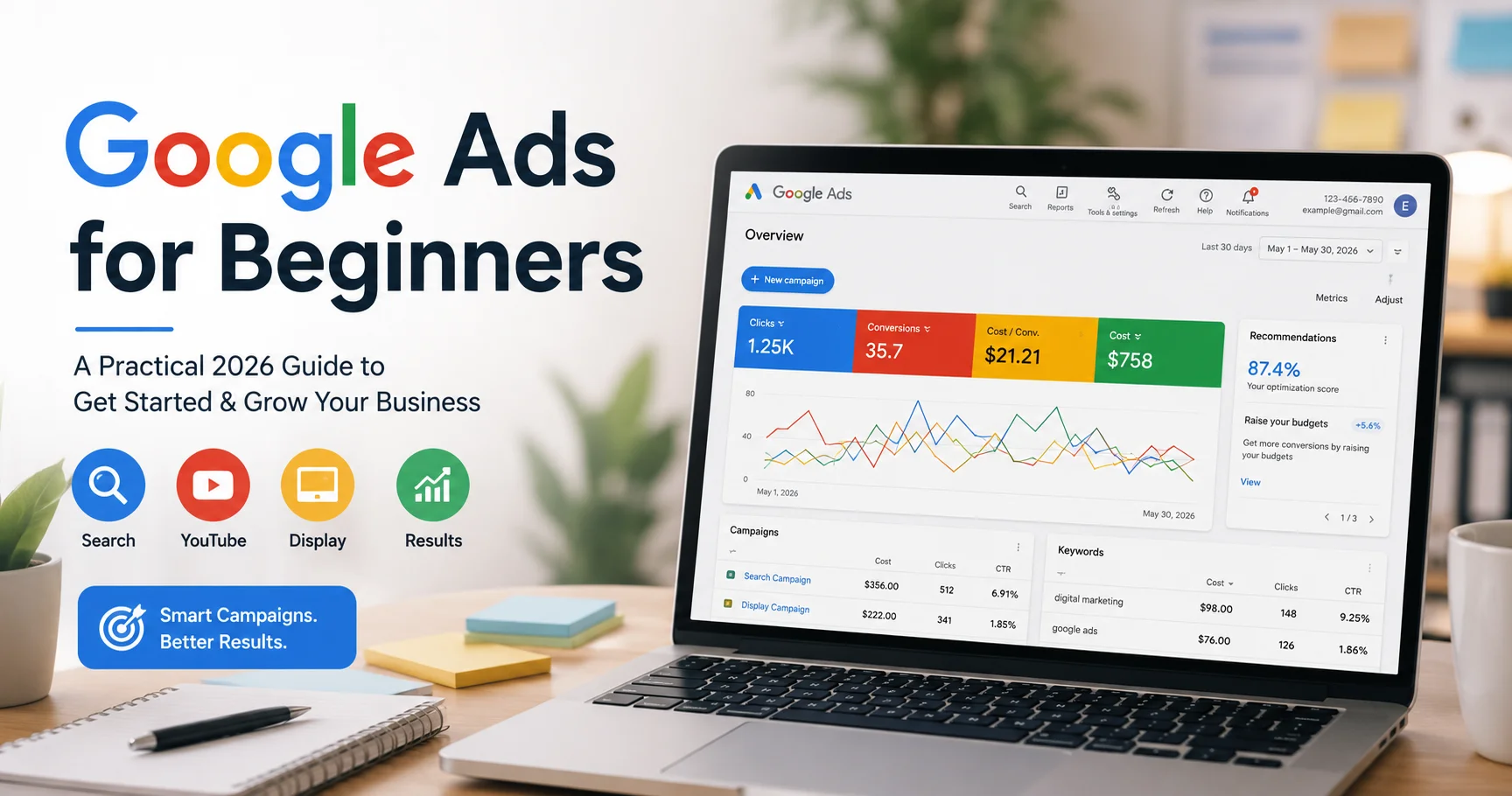
What Is Google Ads and How It Works (2026 Overview)
Google Ads is an online advertising platform where businesses pay to show ads on Google’s search results, YouTube, and partner websites. In 2026, the platform has evolved significantly with AI-driven automation, audience signals, and privacy-first targeting becoming central components.
For beginners, understanding the basic structure is essential:
- Campaign – Your overall advertising objective (sales, leads, traffic)
- Ad Group – A set of related keywords and ads
- Keywords – Search terms your audience uses
- Ads – The actual content users see
Google Ads operates on a pay-per-click (PPC) model, meaning you only pay when someone clicks your ad. However, success depends on more than budget. Google evaluates ads using Quality Score, which considers:
- Relevance of keywords
- Landing page experience
- Expected click-through rate (CTR)
Modern Google Ads also uses machine learning to optimize bidding strategies such as:
- Maximize conversions
- Target CPA (Cost Per Acquisition)
- Target ROAS (Return on Ad Spend)
For businesses working with Digital You, combining paid ads with strong landing pages and SEO can significantly improve overall performance.
Google’s Core Advertising Principle (Important Insight)
“Focus on the user and all else will follow.” – Google
This principle remains central to Google Ads in 2026. Campaigns that prioritize relevance, honesty, and user value consistently outperform those that rely on aggressive or misleading tactics. Creating helpful ads and seamless landing pages is no longer optional—it is required for both compliance and performance.
Setting Up Your First Google Ads Campaign
Starting your first campaign may seem complex, but breaking it into steps makes it manageable.
Step 1: Define Your Goal
Choose a clear objective:
- Website traffic
- Lead generation
- Online sales
- Brand awareness
Step 2: Select the Right Campaign Type
Common beginner-friendly options:
- Search Ads (best for intent-based traffic)
- Display Ads (visual brand exposure)
- Video Ads (YouTube engagement)
Step 3: Keyword Research
Use reliable tools like Google Keyword Planner and Google Trends to identify relevant search terms. Focus on:
- High-intent keywords
- Location-based terms (important for Australian businesses)
- Long-tail keywords for better targeting
Step 4: Write Effective Ads
Your ad should include:
- Clear headline
- Strong value proposition
- Call-to-action (CTA)
Example:
“Get Professional Google Ads Setup – Start Driving Leads Today”
Step 5: Set Budget and Bidding
Start small and scale gradually:
- Daily budget control
- Automated bidding for beginners
Google Ads Best Practices for 2026
To succeed in 2026, follow these updated best practices:
1. Focus on Search Intent
Target users based on what they are actively searching for, not just demographics.
2. Use AI Smartly
Leverage automation, but monitor results:
- Smart bidding
- Responsive search ads
3. Optimize Landing Pages
A strong landing page should:
- Load fast
- Be mobile-friendly
- Match ad intent
4. Use Negative Keywords
Prevent wasted budget by excluding irrelevant searches.
5. Track Conversions Properly
Set up:
- Google Tag Manager
- Conversion tracking
Common Mistakes Beginners Should Avoid
Many beginners lose budget due to avoidable errors:
- Targeting too many broad keywords
- Ignoring ad relevance
- Not tracking conversions
- Sending traffic to poor landing pages
- Setting and forgetting campaigns
Avoiding these mistakes can significantly improve ROI from the start.
Budgeting Tips for Beginners
You don’t need a large budget to start. Focus on efficiency:
- Start with a small daily budget
- Test multiple ads
- Scale what works
- Pause underperforming keywords
For local businesses in Australia, even a modest budget can generate leads if targeting is precise.
How Google Ads Works with SEO
Google Ads and SEO are most effective when used together:
- Ads provide instant traffic
- SEO builds long-term visibility
- Data from Ads improves SEO keyword strategy
If you are building a complete digital strategy, combining both approaches ensures balanced growth.
Google Ads Resources Hub (Guides & learning tools)
“If you need professional support, you can explore services or contact the team through Digital You.”
Final Thoughts
Paid advertising in 2026 is more focused on trust, relevance, and user experience than ever before. Businesses that adapt to privacy changes, use AI effectively, and deliver meaningful content will achieve better results. By combining smart strategies with strong website integration, brands can build sustainable growth and long-term success in digital advertising.