
Essential Google Ads Mistakes to Avoid for Better Campaign Performance
Running successful pay-per-click campaigns in 2026 requires strict alignment with Google’s updated advertising guidelines and AI-driven quality standards. Search engine policies now prioritize user transparency, accurate ad targeting, and genuine landing page value. Understanding these core best practices helps advertisers protect their ad spend while building sustainable, high-performing campaigns that generate real business growth without risking account compliance issues.
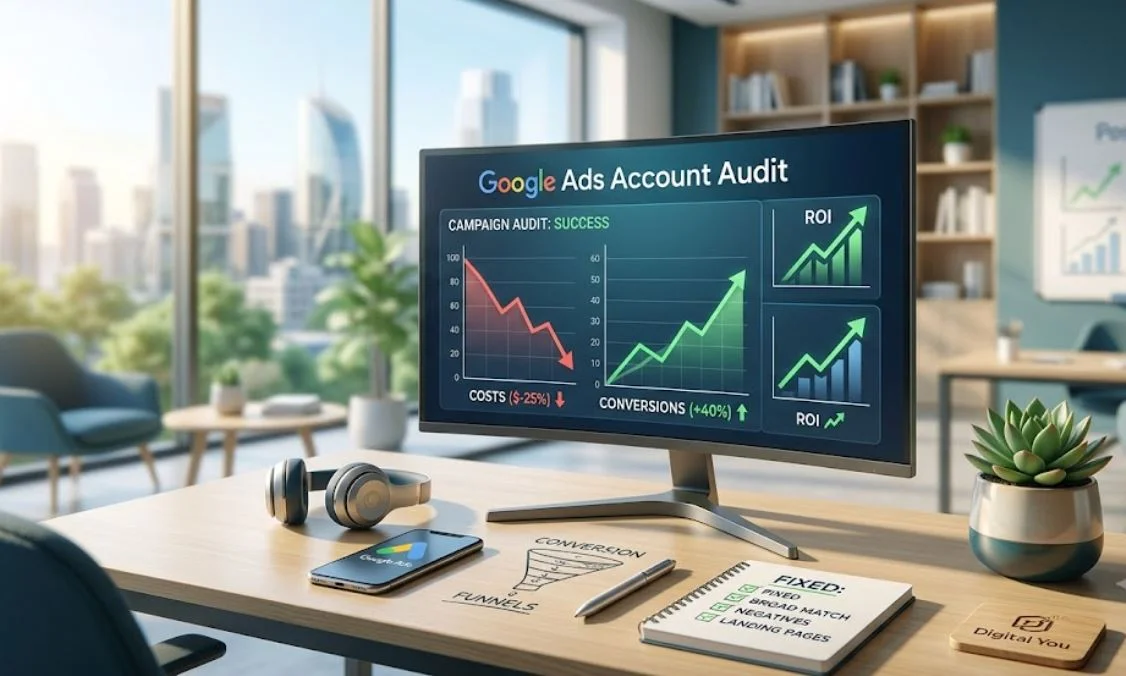
Understanding the Real Cost of Unoptimized Ad Campaigns
Launching a Google Ads campaign is fast, but managing it efficiently requires continuous refinement. Many businesses inadvertently waste thousands of dollars each month due to minor configuration errors, broad keyword targeting, and overlooked account settings. When ads attract clicks from users who have no intention of buying, your ad budget drains without delivering meaningful returns.
Furthermore, Google evaluates every campaign based on Quality Score—a metric determined by ad relevance, expected click-through rate, and landing page experience. When your campaign suffers from weak structure or mismatched messaging, your Quality Score drops. A lower Quality Score forces you to pay higher costs per click (CPC) just to maintain basic ad visibility against competitors.
Over time, this inefficiency creates a frustrating cycle: rising ad costs, lower conversion volume, and a misguided belief that pay-per-click advertising simply does not work for your industry. In reality, most failed campaigns stem from preventable strategic missteps rather than platform limitations. By identifying and correcting these technical oversights early, businesses can drastically lower acquisition costs, improve audience targeting, and achieve a far healthier return on investment across every search campaign.
Why Alignment with Google’s Core Standards Matters
As Google explicitly states in its official advertiser guidance, “Google Ads is designed to help you reach the right customers at the right moment with relevant messaging.” Failing to align keyword intent with landing page relevance undermines this core objective, leading to elevated cost-per-click rates, reduced campaign visibility, and wasted advertising spend across competitive search markets.
The Most Common Google Ads Mistakes to Avoid
1. Relying heavily on broad match without negative keywords
Broad match keywords allow Google’s algorithm to show your ads for searches related to your keyword, including synonyms, misspellings, and related queries. While broad match can expand reach, using it without a robust negative keyword list often leads to irrelevant clicks.
-
The Fix: Review your Search Terms report weekly. Identify non-converting or irrelevant search terms and add them as negative keywords to preserve your budget.
2. Sending ad traffic to a generic homepage
Directing paid search traffic to your homepage is one of the quickest ways to lose potential customers. Homepages generally offer broad information rather than a focused answer to a specific search query.
-
The Fix: Build dedicated, high-converting landing pages tailored to the exact service or product advertised in your campaign.
3. Ignoring proper conversion tracking
Running ads without setting up accurate conversion tracking is like driving with your eyes closed. Without clear conversion data, you cannot determine which keywords, ads, or audiences generate actual revenue.
-
The Fix: Set up conversion goals within Google Tag Manager and link them directly to Google Ads before spending your budget.
4. Overlooking ad assets and extensions
Ad assets (formerly known as ad extensions) provide additional information like phone numbers, sitelinks, callouts, and location details. Skipping these reduces your ad’s physical size on the search results page and lowers your expected click-through rate.
-
The Fix: Utilize at least four sitelink assets, callout assets, and structured snippets for every ad group to maximize visibility.
Advanced PPC Optimization Strategies for 2026
Modern pay-per-click management involves more than just selecting keywords. Search algorithms rely heavily on signals like user location, device type, and landing page performance to determine ad placement.
If you are looking for comprehensive support to streamline your marketing, exploring professional Digital You Services can help align your paid advertising with broader search engine optimization and website growth goals.
Key Practices for Long-Term Ad Efficiency
-
Segment campaigns by intent: Group transactional keywords separately from informational ones.
-
Optimize for mobile devices: Ensure landing pages load in under two seconds on mobile networks.
-
Test creative variations: Always keep two responsive search ads active per ad group to test headlines and descriptions.
-
Monitor official guidelines: Regularly consult the official Google Ads Policy Center to maintain full account compliance.
To maintain account health and performance standards, advertisers should also review the official Google Ads Help Center for up-to-date documentation on bidding strategies and asset policies.
When paid search campaigns are carefully configured and monitored, they serve as a predictable growth channel. If you have questions about auditing your existing account, feel free to Contact Digital You for direct guidance from experienced specialists.
Final Thoughts
Mastering Facebook ad objectives is all about matching your business goals with Meta’s algorithmic strengths. Choosing the wrong objective leads to wasted budget, while selecting the right one allows Meta’s AI to deliver consistent, cost-effective results. Keep your strategy simple, align your landing pages with user intent, and continually test your creatives to scale your campaigns effectively in 2026.