22 Top Web Design Trends 2026-2027
In 2026, Google’s evolving guidelines emphasize “Helpful Content”—prioritizing user-centric, authentic, and fast-loading experiences over keyword stuffing. For businesses, this means your web design must be both beautiful and functionally optimized to support high-converting Google Ads campaigns. By aligning your site’s architecture with current best practices, you ensure both search visibility and a seamless journey for every visitor who lands on your page.
The Future of Digital Aesthetics and User Experience
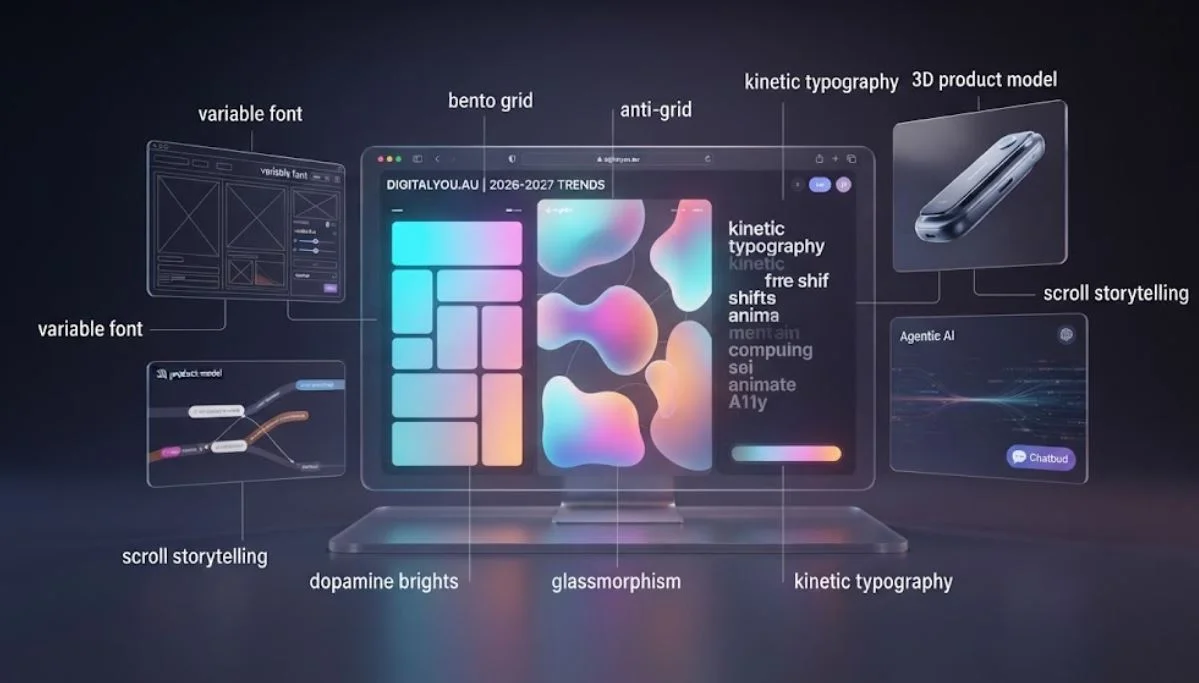
Web design in 2026 is moving away from the static, overly polished “perfect” look toward experiences that feel human, fluid, and genuinely useful. We are seeing a major shift toward organic anti-grid layouts, where asymmetrical shapes replace rigid boxes to create a more natural flow. Bento-style grids remain a dominant modular approach, offering a clean, organized way to display complex information without cluttering the screen. Meanwhile, scroll storytelling is transforming passive browsing into cinematic journeys, keeping users engaged through timed animations and interactive reveals. Beyond these visuals, performance is non-negotiable. With the rise of “Agentic AI,” websites are evolving from static pages into intelligent, self-optimizing assistants that can handle scheduling, lead qualification, and personalized content delivery in real-time. Whether you are using bold, saturated “dopamine” color palettes or sophisticated glassmorphism to add depth, the goal remains the same: balancing visual expression with lightning-fast load times. At DigitalYou, we specialize in bridging these advanced design trends with technical performance, ensuring your digital presence is not just modern, but strategically positioned to drive measurable growth.
Why Quality Design is Your Greatest SEO Asset
When it comes to the intersection of aesthetics and search performance, Google’s stance remains clear: “The focus should be on creating high-quality content that is helpful, reliable, and people-first.” In 2026, this means your design choices must prioritize accessibility, mobile responsiveness, and clear navigation. A beautiful site that is hard to use or slow to load will never achieve long-term rankings.
22 Essential Web Design Trends to Consider for 2026-2027
To stay ahead, consider integrating these high-impact elements into your next project:
-
Kinetic & Animated Typography: Moving text that reacts to user interactions adds personality and guides the viewer’s eye through your key value propositions.
-
Variable Fonts: A technical powerhouse that improves performance by packing an entire typeface family into a single file, ensuring your site stays fast while looking incredibly sharp.
-
Human-Centric Illustrations: In an era of AI-generated content, hand-drawn elements and nostalgic design touches provide the authenticity that builds trust with your audience.
-
Immersive 3D Elements: Utilizing lightweight models allows you to showcase products or services in an interactive way that increases time-on-page and reduces purchase hesitation.
-
Bento Grid Layouts: Asymmetric, modular card arrangements that display rich content cleanly while adapting perfectly to mobile screens.
-
Organic Anti-Grid Layouts: Fluid shapes and broken grids that step away from rigid box structures to create a more natural, human-centered feel.
-
Tactile Brutalism: Sharp geometry, clean 1px solid borders, and stark typography replacing heavy soft UI drop shadows to emphasize engineered precision.
-
Agentic AI Integration: Autonomous digital assistants built into websites that handle complex actions like appointment booking, user qualification, and live personalization.
-
Scroll Storytelling & Cinematic Sequences: Timed reveals and progressive content loading that turn passive page reading into an interactive brand journey.
-
Glassmorphism & Frosted UI: Translucent layers and soft background blurs that introduce sophisticated depth without visual clutter.
-
Dopamine Color Palettes: High-saturation electric hues and neon accents engineered to grab attention and boost user engagement instantly.
-
Dark Mode as Standard: A default UI necessity that cuts eye strain, improves low-light readability, and saves device battery life.
-
Gradient Color Schemes: Soft radial and linear transitions across full-screen backgrounds that establish smooth visual moods.
-
CSS Noise & Film Grain Textures: Subtle physical texture injections via lightweight CSS logic instead of heavy, processor-lagging 3D plugins.
-
Monochromatic Layouts: Single-color palettes utilizing tone variations and stark contrast to focus user attention completely on content.
-
Blending Photos with Graphics: Hybrid compositions mixing real photography with digital iconography, custom doodles, and microcopy overlays.
-
Machine Experience (MX) Optimization: Structuring semantic HTML and clean design systems so AI search crawlers can parse your content effortlessly.
-
Thumb-Friendly Mobile Navigation: Ergonomic layout planning designed to let mobile users easily reach menus and key actions with a single thumb.
-
Micro-Interactions & Hover States: Tiny, responsive feedback animations on buttons, sliders, and inputs that make interfaces feel alive and intuitive.
-
Accessibility & Inclusivity (A11y): High-contrast color audits, keyboard navigation, and screen-reader optimizations built directly into the core design framework.
-
Performance-First Code Architecture: Stripping away unnecessary plugins and heavy scripts to satisfy Google’s strict Core Web Vitals speed standards.
-
Chatbuds (Advanced Chatbots): Conversational, human-like virtual assistants designed to guide visitors naturally instead of relying on rigid, frustrating pop-up scripts.
Optimizing Your Digital Presence
Your website’s infrastructure determines how effectively you can leverage these trends. If you’re looking to audit your current site or plan a new launch, our Services are tailored to balance these cutting-edge design trends with the technical SEO requirements that Google demands.
Consistency is key. Whether you are building a new portal or updating an existing one, ensure that your mobile-first approach is the priority, as most users will experience your brand through a handheld device. If you encounter any technical roadblocks, feel free to Contact our team to discuss how we can streamline your development process.
Final Thoughts
The landscape of web design for 2026-2027 is all about finding the harmony between artistic expression and technical reliability. As you experiment with kinetic typography, bento grids, and AI integration, remember that your primary goal is to provide a seamless, helpful, and fast experience for your users. A great website acts as a bridge between your brand and your customer; keep it clean, keep it fast, and keep it human. If you need help bringing these trends to life, feel free to visit our Home page to see how we are shaping the future of digital experiences.