E-commerce Dos and Don’ts for Fitness Coaches and Gym Owners
E-commerce dos and don’ts play a critical role when personal trainers and fitness brand owners decide to monetize their expertise online.
Selling digital workout plans, coaching subscriptions, branded gym apparel, or dietary supplements requires a clear strategy. Consequently, running a online shop without proper planning often leads to abandoned carts, slow website speeds, and wasted ad budgets.
The global online fitness market continues to expand rapidly. However, turning casual social media followers into paying store clients takes more than posting product links. In this guide, we break down the most effective strategies to build a seamless digital store for your fitness business.
E-commerce Dos and Don’ts for Online Fitness Stores
Building an online store requires balancing smooth user experience with high-converting sales tactics. Therefore, following proven industry guidelines will save you time and maximize your profit margins.
The Essential E-Commerce Dos for Fitness Brands
1. Do Optimize Your Store for Mobile Users
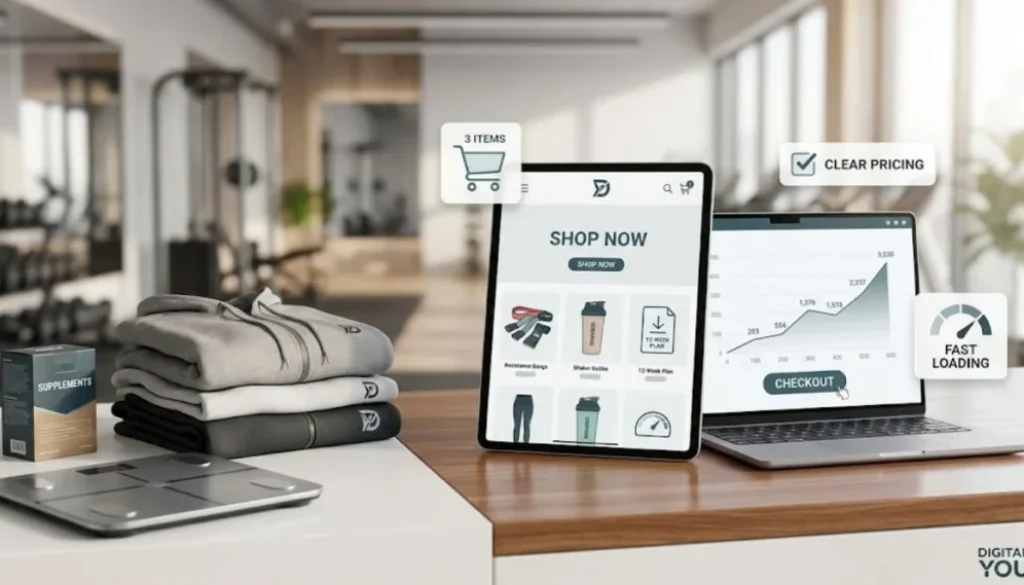
Most fitness clients browse workout videos and buy apparel directly from their smartphones. As a result, your e-commerce platform must load instantly on mobile devices. Ensure your navigation menu remains clean, buttons are easy to tap, and the checkout process requires minimal steps.
2. Do Offer Clear Digital and Physical Product Bundles
fitness coaching often pairs naturally with physical items. For example, you can bundle a 12-week transformation program with branded resistance bands or a custom shaker bottle. This strategy increases your average order value while delivering higher value to your clients.
3. Do Display Social Proof and Real Transformations
Fitness consumers buy results, not just promises. Furthermore, showing before-and-after photos, video testimonials, and verified product reviews builds immediate trust. Always feature client success stories directly on your product landing pages.
       Client Transformation / Review
                       │
                       ▼
      High-Converting Product Page
                       │
                       ▼
      1-Click Mobile Checkout Flow
The Critical E-Commerce Don’ts to Avoid
1. Don’t Hide Shipping Fees or Program Terms
Hidden checkout costs cause immediate shopping cart abandonment. Therefore, clearly display shipping fees, subscription renewal terms, and refund policies upfront. Transparency keeps your brand credible and reduces customer chargebacks.
2. Don’t Ignore Store Loading Speed
Slow websites destroy online conversions. If your product images are uncompressed or your store script is bloated, potential clients will leave within seconds. If you want to scale smoothly, exploring custom WordPress web design and development can ensure your store operates at peak performance.
3. Don’t Overcomplicate the Checkout Process
Asking for unnecessary personal information frustrates buyers. Keep your checkout fields minimal. Additionally, offer modern payment options like Apple Pay, Google Pay, and credit cards to secure quick impulse purchases.
Mastering Digital Product Sales vs. Physical Merch
Fitness coaches often struggle to decide whether to sell digital downloads or physical merchandise. Understanding the key mechanics behind both options helps you balance inventory risk and profit margins effectively.
| Strategy Metric | Digital Fitness Products (E-books, App Access) | Physical Merch (Apparel, Supplements) |
| Profit Margins | Extremely High (80% – 95%) | Moderate (30% – 50%) |
| Inventory Overhead | Zero | Requires storage & fulfillment |
| Fulfillment Time | Instant digital delivery | 2 to 5 business days shipping |
| Customer Engagement | Direct daily routine usage | Visible real-world brand representation |
Strategic E-Commerce Dos and Don’ts for Paid Advertising
Running ads without a clear sales funnel burns your marketing budget quickly. Therefore, aligning your advertising setup with your e-commerce layout is essential.
Smart Advertising Dos:
- Run Retargeting Campaigns: Re-engage website visitors who added a workout plan to their cart but left before buying.
- Leverage Short-Form Video Ads: Show short clips of your gym gear in action or quick exercise teasers on Instagram and TikTok.
Advertising Don’ts:
- Don’t Send Ad Traffic to Your Homepage: Always send ad traffic to dedicated, high-converting product pages.
- Don’t Forget Tracking Pixels: Setting up conversion tracking ensures you measure return on ad spend accurately. If you need help structuring profitable marketing funnels, partnering with an experienced digital marketing agency in Australia provides structured guidance.
Technical Optimization for Fitness Websites
A fast, secure, and intuitive e-commerce setup keeps buyers engaged. Furthermore, search engines reward technically optimized stores with higher organic visibility.
Key Technical Checklist:
- SSL Security Certificate: Secures client payment data during online checkout.
- Optimized Image Sizes: Compresses high-resolution gym photos without losing visual quality. You can check performance best practices via the official Google PageSpeed Insights tool.
- Structured Schema Markup: Helps search engines show product prices, star ratings, and availability directly in search results. For a deeper understanding of search guidelines, review the official Google Search Central documentation.
- Mobile Responsiveness: Ensures your store layout adjusts cleanly across all screen sizes. You can review global web standards on the W3C Standards Portal.
How Digital You Elevates Your Fitness Brand
Building a profitable fitness store requires blending design, search engine optimization, and conversion-focused marketing. Managing all these elements alone can quickly become overwhelming for busy trainers.
At Digital You, we help personal trainers, fitness influencers, and gym owners turn online traffic into reliable revenue. Whether you need a lightning-fast WooCommerce setup, automated sales funnels, or targeted ad campaigns, our team delivers custom solutions designed for sustainable business growth.
Frequently Asked Questions
1. Why are e-commerce dos and don’ts important for personal trainers?
Understanding these guidelines helps fitness trainers avoid costly mistakes, such as poor mobile design or hidden checkout fees. As a result, trainers can protect their brand reputation and convert more social media followers into active paying clients.
2. What is the best platform to sell fitness programs online?
WordPress with WooCommerce offers incredible flexibility, ownership, and SEO control for scaling fitness brands. Alternatively, platforms like Shopify provide quick setups for physical gym merchandise.
3. Should fitness coaches focus on digital downloads or physical merchandise first?
Digital products like training guides or workout apps are ideal to start with because they carry zero inventory costs and offer high margins. Once you build a strong customer base, adding physical merchandise becomes a great way to scale.
4. How can gym owners reduce shopping cart abandonment?
You can reduce cart abandonment by offering one-click checkout options, displaying transparent shipping costs upfront, and sending automated abandoned cart recovery emails.
5. How do paid ads help scale an online fitness store?
Paid ad campaigns on platforms like Meta and Google allow you to reach targeted local or global fitness audiences directly. Consequently, retargeting campaigns help convert interested visitors who didn’t purchase during their first visit.
Final Thoughts
Mastering these essential e-commerce dos and don’ts empowers personal trainers and fitness business owners to build a reliable online revenue stream. Focus on delivering seamless mobile experiences, maintaining price transparency, and showcasing real client transformations. If you are ready to scale your fitness brand with professional web development, SEO, and paid media, reach out through our Contact Page to start building your custom growth strategy today.