
Facebook Ads vs Retargeting
When executing paid media campaigns in 2026, Google’s latest search and content guidelines prioritize clear user intent, transparent definitions, and actionable value over keyword-stuffed claims. According to modern search quality standards, paid advertising guides must clearly distinguish between top-of-funnel audience acquisition and bottom-of-funnel retargeting strategies to help readers make informed, budget-conscious decisions.
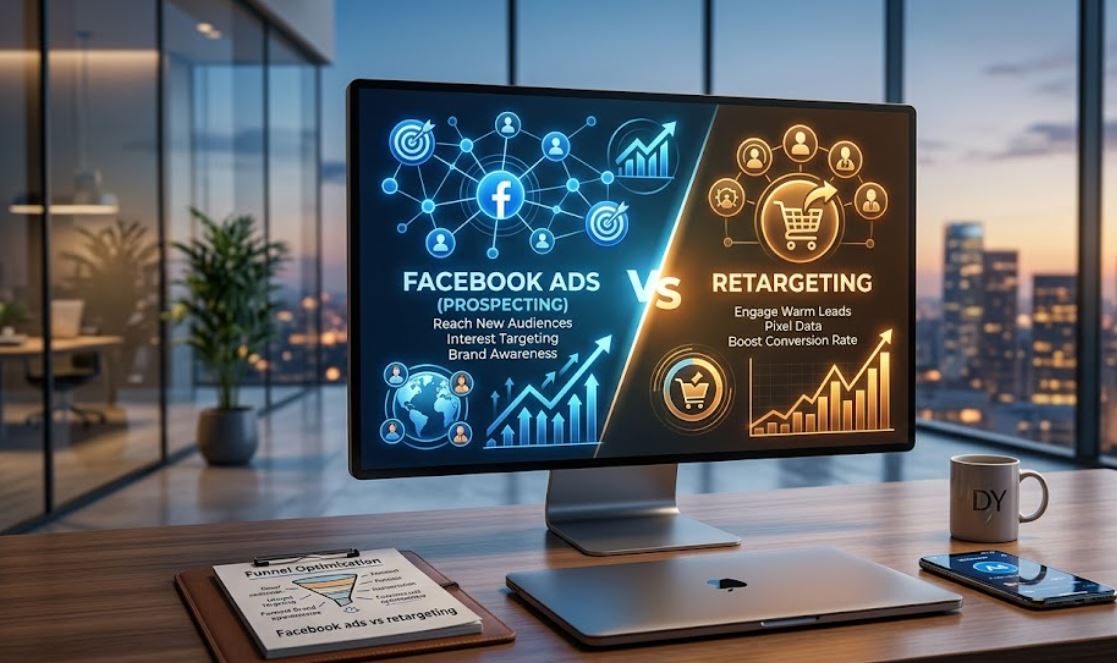
Defining the Core Differences: Facebook Ads vs Retargeting
To build a high-performing social advertising strategy, you first need to understand how prospecting Facebook ads and retargeting ads function within your overall marketing funnel. Standard Facebook ads (prospecting) target cold audiences—people who have likely never heard of your brand. These campaigns rely on interest-based targeting, lookalike audiences, and demographic parameters to generate brand awareness, capture initial attention, and drive fresh traffic to your digital touchpoints.
Retargeting ads, on the other hand, focus exclusively on warm audiences. These are users who have already interacted with your brand by visiting your website, viewing a product, engaging with an Instagram post, or adding an item to their cart without checking out. Instead of introducing a brand from scratch, retargeting acts as a psychological nudge, reminding engaged prospects to return and complete their action.
While prospecting expands your audience pool, retargeting maximizes the value of that pool by capturing lost conversions. Using both approaches sequentially creates an effective flywheel: cold ads continuously introduce new prospective buyers, while retargeting nurtures and converts them into customers.
The Role of Retargeting in Modern Digital Strategy
As search algorithms and ad platforms evolve, maintaining audience touchpoints is vital for consistent conversions. As Google notes in its ad strategy documentation:
“Search and display strategies perform best when integrated with multi-touchpoint audience mapping, ensuring messaging matches the user’s specific stage in the buying journey.”
Strategic Breakdown: When to Use Each Approach
Both ad types serve distinct roles in a balanced digital strategy. Aligning your budget with the correct objective prevents wasted spend and keeps cost-per-acquisition (CPA) low.
Prospecting Facebook Ads
-
Primary Objective: Build brand awareness, reach new customer segments, and drive cold traffic.
-
Best Used For: Product launches, expanding into new geographical markets, or growing top-of-funnel traffic.
-
Targeting Methods: Broad targeting, interest categories, behavior filters, and lookalike audiences.
-
Ad Content Style: Educational videos, problem-solving carousel ads, and brand story introductions.
Facebook Retargeting Ads
-
Primary Objective: Re-engage warm leads and boost conversion rates.
-
Best Used For: Recovering abandoned carts, upselling past customers, or nurturing leads who spent time on key site pages.
-
Targeting Methods: Meta Pixel event data, custom website visitor lists, customer email lists, and engagement custom audiences.
-
Ad Content Style: Social proof, customer reviews, limited-time discount codes, and direct call-to-action messages.
How to Integrate Both Strategies into Your Funnel
Running prospecting ads without retargeting often results in lost conversion opportunities, as cold traffic rarely purchases on the first visit. Conversely, running retargeting without cold Facebook ads eventually exhausts your audience pool, leading to ad fatigue and declining performance.
A practical allocation rule for small-to-midsize ad budgets is the 80/20 framework:
-
Allocate 80% of your budget to cold prospecting Facebook ads to maintain a steady stream of new site visitors.
-
Reserve 20% of your budget for custom retargeting campaigns to capture high-intent users across their decision-making timeline.
For brands looking to streamline their campaigns across search and social channels, seeking guidance from an established digital agency can ensure your tracking pixel setups and conversion paths are optimized. Exploring dedicated digital marketing services helps establish the proper technical foundation before scaling budget spend.
Tracking and Optimization for 2026
With privacy updates, browser cookie changes, and first-party data shifts continuing to reshape tracking across web and app environments, relying solely on basic browser cookies is no longer sufficient.
To keep retargeting lists accurate:
-
Implement Meta’s Conversions API (CAPI): Combine server-side tracking with standard browser pixel tracking for robust data capture.
-
Leverage First-Party Data: Use customer email lists and direct sign-ups to build resilient custom audiences.
-
Monitor Frequency Caps: Keep retargeting frequency between 3 to 5 impressions per user per week to avoid audience burnout.
-
Analyze Cross-Channel Metrics: Review how social engagement translates into direct organic searches or referral conversions over time.
If you have questions about configuring tracking pixels or setting up conversion tracking across your ad accounts, reaching out to a media team via a direct contact page can help clarify your setup.
Final Thoughts
Mastering social media advertising isn’t about choosing between Facebook ads or retargeting—it’s about combining them into a cohesive acquisition strategy. Cold prospecting ads build your brand’s footprint and drive fresh interest, while retargeting turns that initial attention into measurable revenue. Balancing your budget between both channels ensures a continuous flow of new prospects and higher overall return on investment.
To learn more about optimizing your online footprint or structuring full-funnel marketing strategies, visit the Digital You home page for additional insights and media strategies.